Back to Blog
The Hidden Costs of Inefficiency in Real Estate
StableWorks
Research shows how slow responses, outdated workflows, and low trust are costing real estate teams deals, revenue, and damaging long-term client relationships.
Sep 29, 2025
Back to Blog
The Hidden Costs of Inefficiency in Real Estate
StableWorks
Research shows how slow responses, outdated workflows, and low trust are costing real estate teams deals, revenue, and damaging long-term client relationships.
Sep 29, 2025
Back to Blog
The Hidden Costs of Inefficiency in Real Estate
StableWorks
Research shows how slow responses, outdated workflows, and low trust are costing real estate teams deals, revenue, and damaging long-term client relationships.
Sep 29, 2025

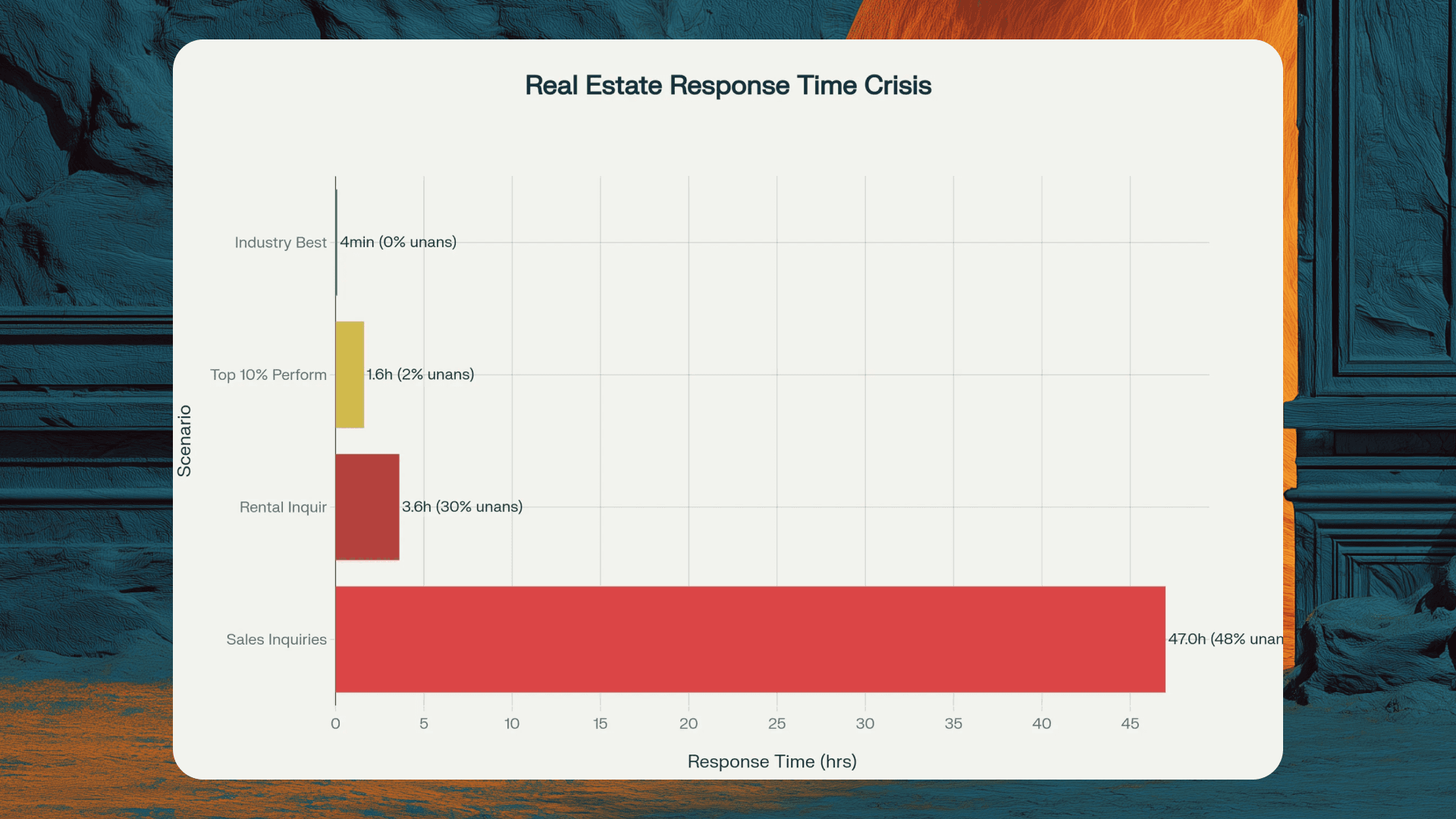
Real estate is built on timing, yet the industry has allowed delay to become normal. Buyers send inquiries expecting quick acknowledgment, but the average response time stretches to 47 hours and nearly half of inquiries go unanswered. Data shows that contacting a lead within five minutes makes conversion 21 times more likely, while most deals go to the first agent who replies. This gap between customer expectation and industry performance is not small inefficiency rather a systemic failure that costs billions in missed commissions.
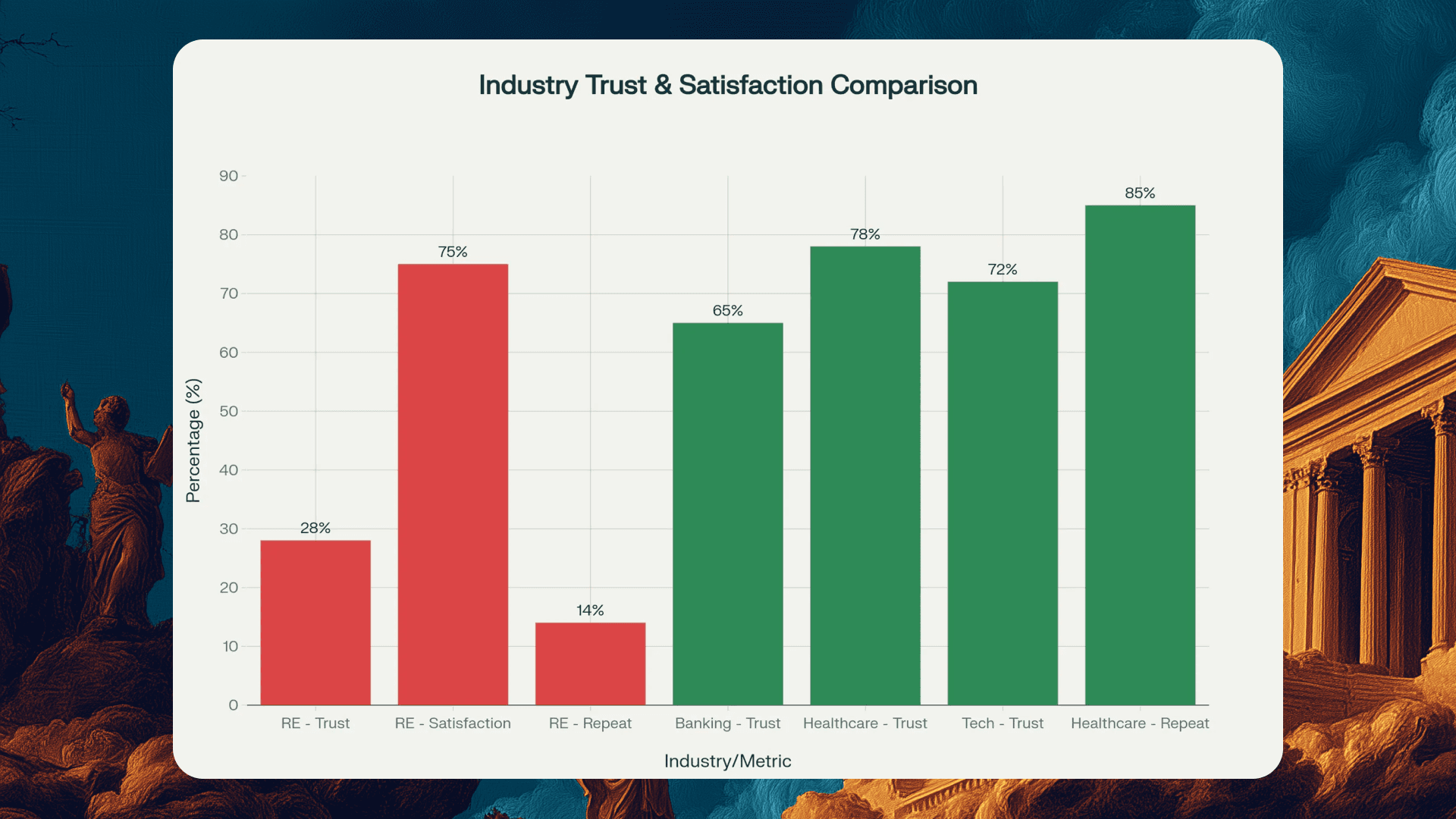
Trust compounds the problem. Surveys show estate agents sit at 28% trust, one of the lowest scores across professions. At the same time, 86% of buyers never return to the same agent for a second transaction. This churn erodes long-term value and pushes firms into constant new-lead acquisition. Expectations continue to rise: sellers often want replies inside 30 minutes, yet only a fraction of agents reach that mark. When slow responses meet low trust, the relationship collapses before it starts.
Search Inefficiencies Drag Down Conversion
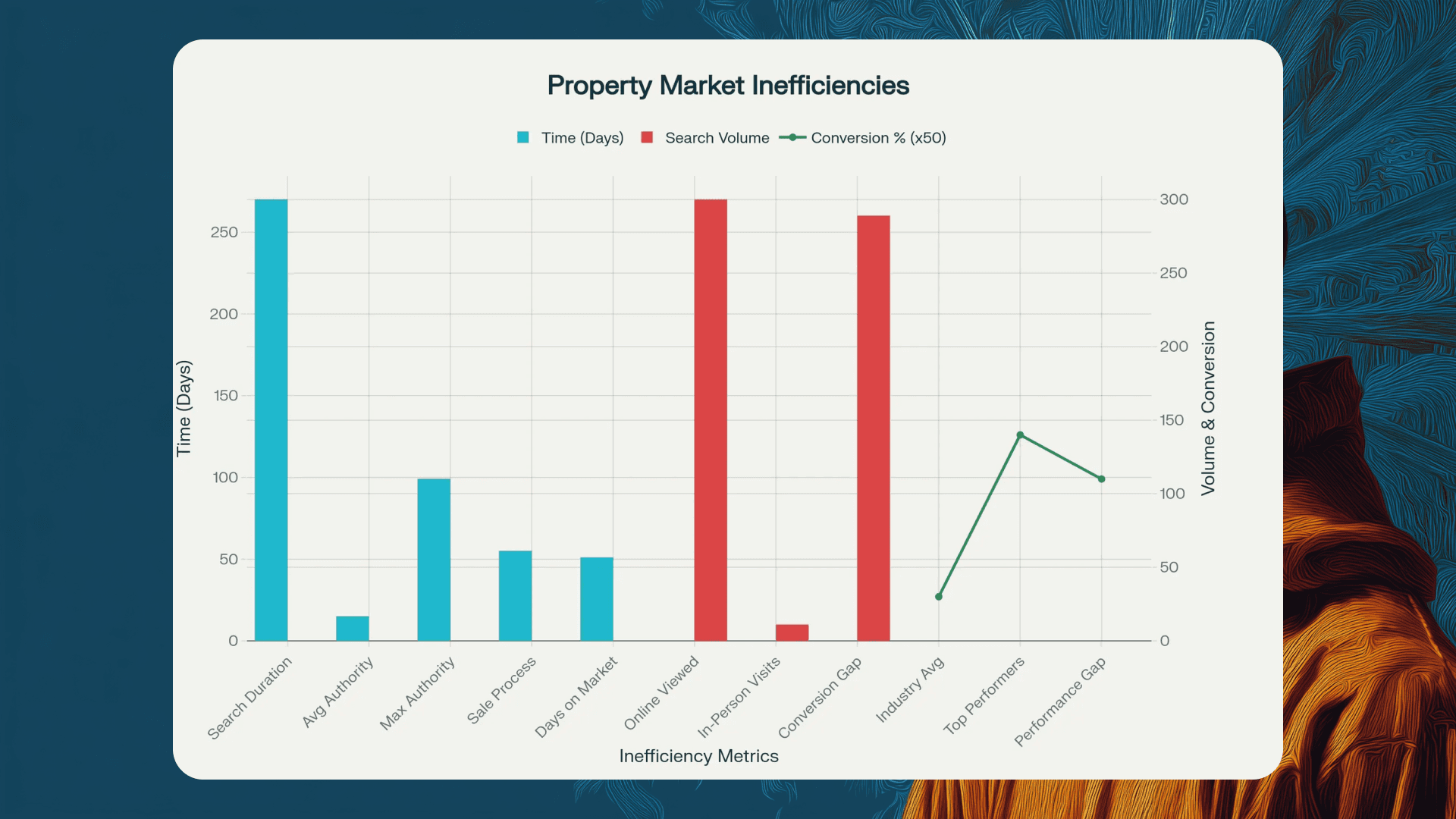
The customer journey is long and exhausting. Buyers spend around nine months searching, view 300 or more listings, and attend 11 or more inspections. Even after that effort, the industry average conversion rate hovers around 0.6%. Homes spend an average of 51 days on market, and sales stretch across 47–62 days from offer to completion. Every step carries friction: inconsistent listing quality, long waits for local searches, fragmented communication between parties.
The scale of the inefficiency suggests the issue is structural, not personal. Agents work hard, but without tools that compress timelines and filter noise, the process remains slow. Buyers who endure nine months of scattershot searching are less satisfied, less trusting, and less likely to return for another transaction. The numbers confirm it: customer satisfaction in real estate lags other service industries by wide margins.
Where Inefficiencies Hide—and How AI Addresses Them
The first choke point is inquiry response. Long delays and high drop-off rates are well documented. AI shifts this by acknowledging inquiries instantly, asking qualifying questions, and scheduling meetings automatically. The handoff happens in the same channels buyers already use such as email, web chat, or WhatsApp, so the workflow feels natural. By ensuring every new lead gets a timely and consistent reply, AI closes the most costly gap in the funnel.
Property search is another drain. Rather than showing hundreds of options, AI models can prioritize based on budget, neighborhood features, commute patterns, and lifestyle trade-offs. These systems learn as conversations progress, narrowing choices and reducing fatigue. The aim is not to flood the inbox but to create a shortlist that feels accurate and adaptive.
Listing quality often depends on how much time an individual agent has. AI speeds up description drafting, pulls amenities directly from documents, and generates neighborhood context. Updates flow through multiple channels at once, so changes are reflected everywhere with minimal delay. Consistency improves trust, and velocity means buyers see the most accurate version sooner.
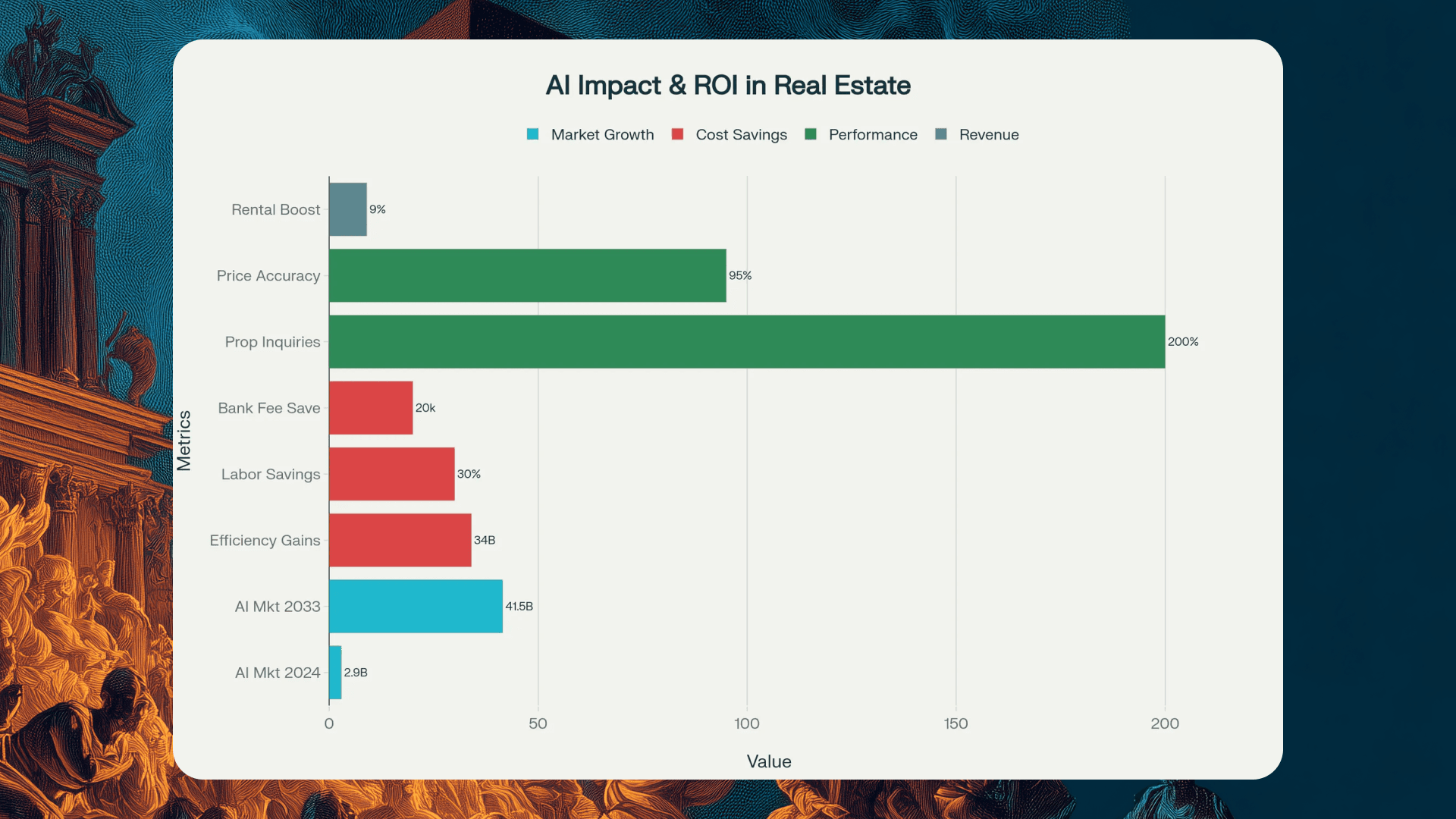
Pricing has always been fraught. Sellers suspect agents of bias, and buyers fear overpayment. AI tools that combine comparable sales, market trends, and property specifics provide transparent ranges and explanations. Studies show models reaching ~95% accuracy on price predictions, which gives both sides more confidence. This is especially valuable in negotiations, where a credible benchmark often determines whether deals move forward.
Finally, CRM systems often suffer from partial data and late updates. AI can log interactions, refresh records, and prompt next steps. By nudging agents toward consistent follow-through, these systems reduce lead leakage and make the pipeline a current, not historical, record. Leaders can then track whether days on market and seller acceptance are improving against benchmarks.
Regional Signals
The research also points to geography shaping adoption. In Asia Pacific, growth potential is especially high. The region carries trillions in real estate value, transaction volumes are climbing, and GDP forecasts remain supportive. Yet PropTech investment still represents a small fraction of global totals relative to market size, leaving room for expansion. In Central Europe, digital ambition is strong and awareness of AI is growing, but actual integration rates remain low. That gap creates opportunity for early adopters to differentiate by running leaner, faster processes
Measuring the Shift
Progress is visible when tracked with a few clear metrics. First-response time and the share of inquiries answered inside five minutes measure whether teams are meeting the speed threshold. Appointment set rates and buyer-to-tour conversion show whether conversations are moving forward. Listing throughput, measured by drafts completed and time-to-publish, reveals whether operations scale without delay. Finally, seller acceptance rates and days on market reflect whether efficiency translates into results. These metrics give leaders a straightforward way to confirm that change is working.
The Adoption Gap Behind the Numbers
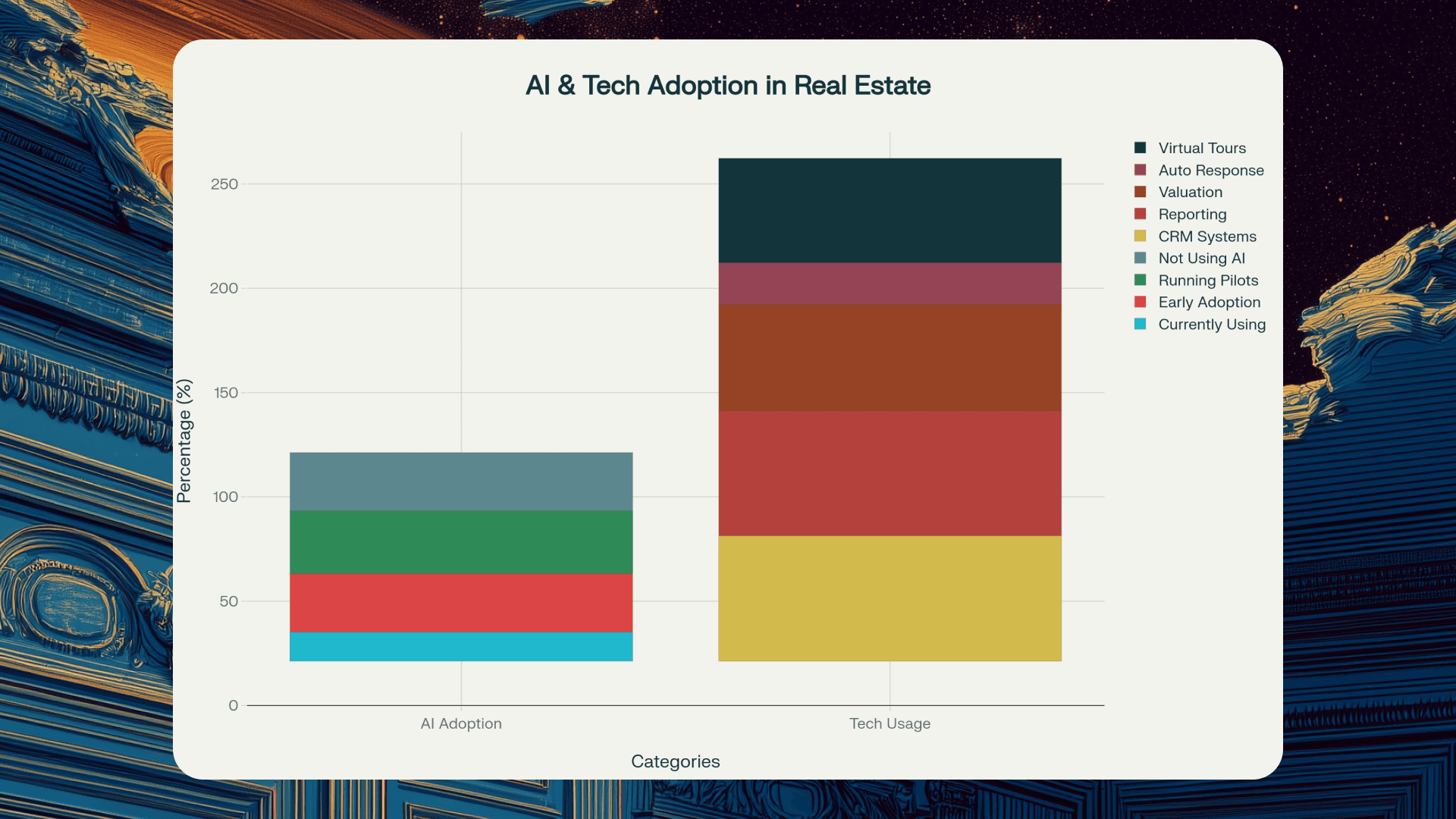
If the metrics show lagging response times and thin conversion, the cause is usually not effort but stack design. Many teams have invested in visible tools like virtual tours and reporting, while the parts of the workflow that determine speed and trust, such as first response, qualification, and pricing rationale, remain manual or loosely connected. Heavy reliance on spreadsheets and legacy systems slows updates and creates inconsistency, which makes the five-minute window hard to hit and follow-through uneven.
Adoption should track customer friction, not vendor categories. Start where latency and uncertainty are highest: auto-response and triage integrated with email, web chat, and WhatsApp; property matching that learns from each interaction; pricing explanations that are transparent and easy to share with clients. These changes move the numbers within weeks because they shorten the first mile and cut rework later.
Conclusion: Turning Research into Results
The numbers show a sector struggling to meet modern expectations. Buyers wait too long for replies, search too long for properties, and trust too little in the process. Meanwhile, firms continue to rely on manual systems and spreadsheets that can’t keep pace. The result is low conversion, high churn, and missed revenue. AI is not a side project in this context. Instead, it is a set of practical tools that address the very points where value leaks out of the system.
When applied to the workflow, AI closes gaps that have resisted traditional fixes. Inquiries receive timely replies, recommendations match real preferences, listings update quickly, and pricing conversations gain credibility. Teams that make these changes already report faster appointment booking, more listings processed per operations lead, higher buyer-to-tour conversion, and stronger seller acceptance. These outcomes aren’t abstract, they are measured improvements that show what “good” can look like.Need help integrating AI into your business? Contact StableWorks to discover how AI will help your business.
Real estate is built on timing, yet the industry has allowed delay to become normal. Buyers send inquiries expecting quick acknowledgment, but the average response time stretches to 47 hours and nearly half of inquiries go unanswered. Data shows that contacting a lead within five minutes makes conversion 21 times more likely, while most deals go to the first agent who replies. This gap between customer expectation and industry performance is not small inefficiency rather a systemic failure that costs billions in missed commissions.
Trust compounds the problem. Surveys show estate agents sit at 28% trust, one of the lowest scores across professions. At the same time, 86% of buyers never return to the same agent for a second transaction. This churn erodes long-term value and pushes firms into constant new-lead acquisition. Expectations continue to rise: sellers often want replies inside 30 minutes, yet only a fraction of agents reach that mark. When slow responses meet low trust, the relationship collapses before it starts.
Search Inefficiencies Drag Down Conversion
The customer journey is long and exhausting. Buyers spend around nine months searching, view 300 or more listings, and attend 11 or more inspections. Even after that effort, the industry average conversion rate hovers around 0.6%. Homes spend an average of 51 days on market, and sales stretch across 47–62 days from offer to completion. Every step carries friction: inconsistent listing quality, long waits for local searches, fragmented communication between parties.
The scale of the inefficiency suggests the issue is structural, not personal. Agents work hard, but without tools that compress timelines and filter noise, the process remains slow. Buyers who endure nine months of scattershot searching are less satisfied, less trusting, and less likely to return for another transaction. The numbers confirm it: customer satisfaction in real estate lags other service industries by wide margins.
Where Inefficiencies Hide—and How AI Addresses Them
The first choke point is inquiry response. Long delays and high drop-off rates are well documented. AI shifts this by acknowledging inquiries instantly, asking qualifying questions, and scheduling meetings automatically. The handoff happens in the same channels buyers already use such as email, web chat, or WhatsApp, so the workflow feels natural. By ensuring every new lead gets a timely and consistent reply, AI closes the most costly gap in the funnel.
Property search is another drain. Rather than showing hundreds of options, AI models can prioritize based on budget, neighborhood features, commute patterns, and lifestyle trade-offs. These systems learn as conversations progress, narrowing choices and reducing fatigue. The aim is not to flood the inbox but to create a shortlist that feels accurate and adaptive.
Listing quality often depends on how much time an individual agent has. AI speeds up description drafting, pulls amenities directly from documents, and generates neighborhood context. Updates flow through multiple channels at once, so changes are reflected everywhere with minimal delay. Consistency improves trust, and velocity means buyers see the most accurate version sooner.
Pricing has always been fraught. Sellers suspect agents of bias, and buyers fear overpayment. AI tools that combine comparable sales, market trends, and property specifics provide transparent ranges and explanations. Studies show models reaching ~95% accuracy on price predictions, which gives both sides more confidence. This is especially valuable in negotiations, where a credible benchmark often determines whether deals move forward.
Finally, CRM systems often suffer from partial data and late updates. AI can log interactions, refresh records, and prompt next steps. By nudging agents toward consistent follow-through, these systems reduce lead leakage and make the pipeline a current, not historical, record. Leaders can then track whether days on market and seller acceptance are improving against benchmarks.
Regional Signals
The research also points to geography shaping adoption. In Asia Pacific, growth potential is especially high. The region carries trillions in real estate value, transaction volumes are climbing, and GDP forecasts remain supportive. Yet PropTech investment still represents a small fraction of global totals relative to market size, leaving room for expansion. In Central Europe, digital ambition is strong and awareness of AI is growing, but actual integration rates remain low. That gap creates opportunity for early adopters to differentiate by running leaner, faster processes
Measuring the Shift
Progress is visible when tracked with a few clear metrics. First-response time and the share of inquiries answered inside five minutes measure whether teams are meeting the speed threshold. Appointment set rates and buyer-to-tour conversion show whether conversations are moving forward. Listing throughput, measured by drafts completed and time-to-publish, reveals whether operations scale without delay. Finally, seller acceptance rates and days on market reflect whether efficiency translates into results. These metrics give leaders a straightforward way to confirm that change is working.
The Adoption Gap Behind the Numbers
If the metrics show lagging response times and thin conversion, the cause is usually not effort but stack design. Many teams have invested in visible tools like virtual tours and reporting, while the parts of the workflow that determine speed and trust, such as first response, qualification, and pricing rationale, remain manual or loosely connected. Heavy reliance on spreadsheets and legacy systems slows updates and creates inconsistency, which makes the five-minute window hard to hit and follow-through uneven.
Adoption should track customer friction, not vendor categories. Start where latency and uncertainty are highest: auto-response and triage integrated with email, web chat, and WhatsApp; property matching that learns from each interaction; pricing explanations that are transparent and easy to share with clients. These changes move the numbers within weeks because they shorten the first mile and cut rework later.
Conclusion: Turning Research into Results
The numbers show a sector struggling to meet modern expectations. Buyers wait too long for replies, search too long for properties, and trust too little in the process. Meanwhile, firms continue to rely on manual systems and spreadsheets that can’t keep pace. The result is low conversion, high churn, and missed revenue. AI is not a side project in this context. Instead, it is a set of practical tools that address the very points where value leaks out of the system.
When applied to the workflow, AI closes gaps that have resisted traditional fixes. Inquiries receive timely replies, recommendations match real preferences, listings update quickly, and pricing conversations gain credibility. Teams that make these changes already report faster appointment booking, more listings processed per operations lead, higher buyer-to-tour conversion, and stronger seller acceptance. These outcomes aren’t abstract, they are measured improvements that show what “good” can look like.Need help integrating AI into your business? Contact StableWorks to discover how AI will help your business.
More Articles
Written by
Aaron W.
Nov 24, 2025
The Context Window Expansion and What It Means for Your Business
Context windows expanded 1,000x in five years, enabling AI to process entire contracts, codebases, and document libraries in one pass. Practical guide to capabilities, limitations, costs, and when to use long context versus RAG.

Written by
Aaron W.
Nov 24, 2025
The Context Window Expansion and What It Means for Your Business
Context windows expanded 1,000x in five years, enabling AI to process entire contracts, codebases, and document libraries in one pass. Practical guide to capabilities, limitations, costs, and when to use long context versus RAG.
Written by
Aaron W.
Nov 24, 2025
The Context Window Expansion and What It Means for Your Business
Context windows expanded 1,000x in five years, enabling AI to process entire contracts, codebases, and document libraries in one pass. Practical guide to capabilities, limitations, costs, and when to use long context versus RAG.
Written by
Aaron W.
Oct 24, 2025
The Real Business Impact of AI According to 2024-2025 Data
Research from 2024-2025 reveals that strategic AI implementation delivers 3-10x ROI while 95% of companies see zero returns, with success determined by investment levels, data infrastructure maturity, and treating AI as business transformation rather than technology adoption.

Written by
Aaron W.
Oct 24, 2025
The Real Business Impact of AI According to 2024-2025 Data
Research from 2024-2025 reveals that strategic AI implementation delivers 3-10x ROI while 95% of companies see zero returns, with success determined by investment levels, data infrastructure maturity, and treating AI as business transformation rather than technology adoption.
Written by
Aaron W.
Oct 24, 2025
The Real Business Impact of AI According to 2024-2025 Data
Research from 2024-2025 reveals that strategic AI implementation delivers 3-10x ROI while 95% of companies see zero returns, with success determined by investment levels, data infrastructure maturity, and treating AI as business transformation rather than technology adoption.
Written by
Aaron W
Oct 17, 2025
When Uncertainty Becomes the Safety Signal: How AI Companies Are Deploying Precautionary Safeguards
Anthropic, OpenAI, and Google deployed their newest models with enhanced safety protections before proving they were necessary, implementing precautionary safeguards when evaluation uncertainty itself became the risk signal.

Written by
Aaron W
Oct 17, 2025
When Uncertainty Becomes the Safety Signal: How AI Companies Are Deploying Precautionary Safeguards
Anthropic, OpenAI, and Google deployed their newest models with enhanced safety protections before proving they were necessary, implementing precautionary safeguards when evaluation uncertainty itself became the risk signal.
Written by
Aaron W
Oct 17, 2025
When Uncertainty Becomes the Safety Signal: How AI Companies Are Deploying Precautionary Safeguards
Anthropic, OpenAI, and Google deployed their newest models with enhanced safety protections before proving they were necessary, implementing precautionary safeguards when evaluation uncertainty itself became the risk signal.